
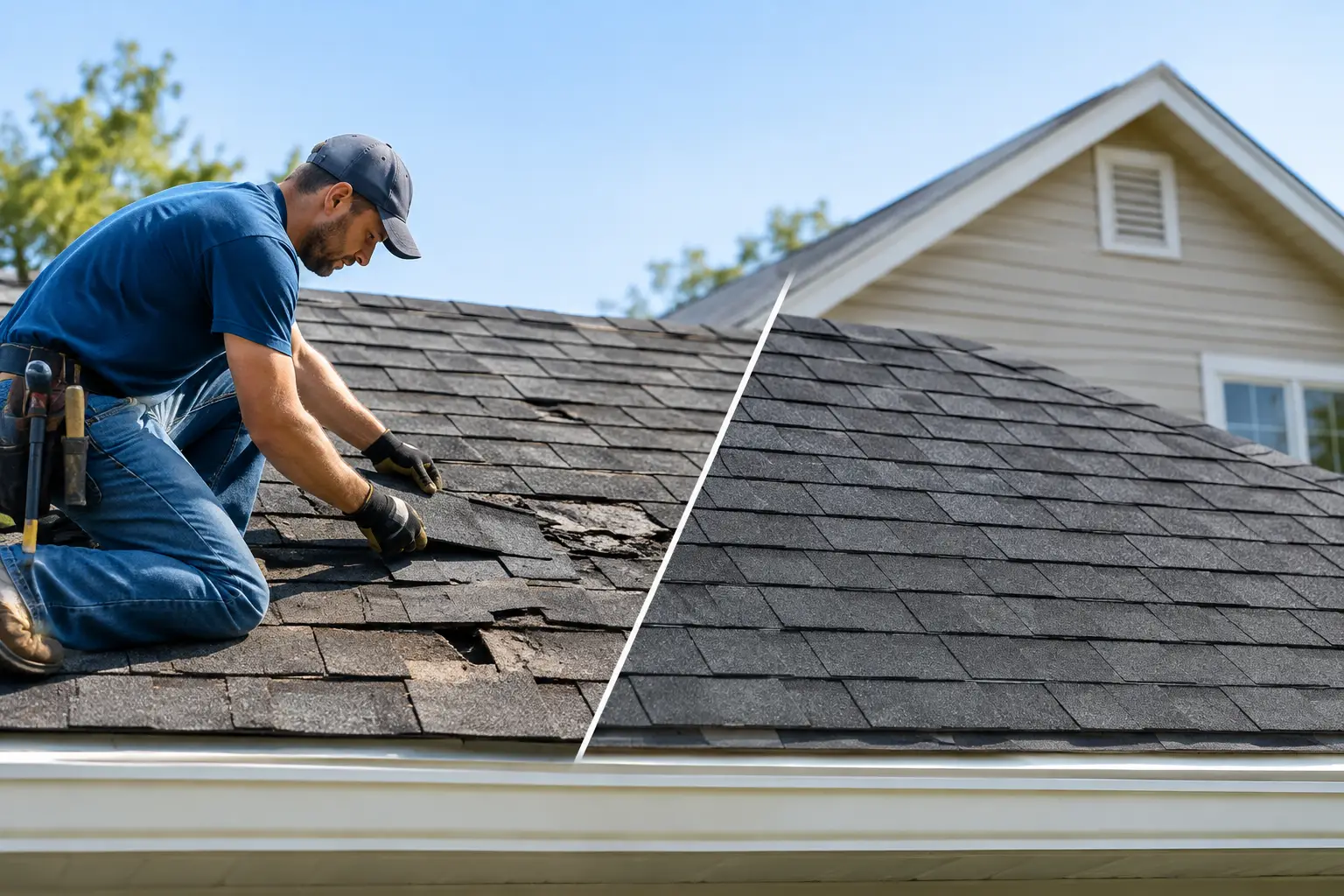
A missing shingle after a summer storm may look like a simple fix. But when leaks, aging materials, or solar plans are part of the picture, the choice between roof repair versus replacement can shape your home’s protection, comfort, and long-term costs for decades.
For homeowners across Virginia, North Carolina, South Carolina, and Georgia, the right answer depends on more than the visible damage. Your roof’s age, the condition of the decking beneath it, the extent of the problem, and whether you are preparing for solar all matter. A professional inspection can turn a stressful surprise into a clear next step.
When Roof Repair Is the Smart Choice
Roof repair makes sense when damage is isolated and the rest of the roof is still performing well. A few shingles lifted by wind, a small flashing issue around a vent, or a localized leak can often be corrected without replacing the entire roofing system.
A repair is usually worth considering when the roof is relatively young, the materials are still available, and there are no signs of widespread wear. If the roof has many years of expected service left, a quality repair protects your home without asking you to pay for work you do not yet need.
The key word is quality. A quick patch that does not address the source of moisture can create a larger problem behind the scenes. Water can travel beneath shingles, soak roof decking, affect insulation, and eventually show up as staining on a ceiling far from the original entry point. A good roofing professional investigates the cause, not just the symptom.
Repair can also be a practical short-term solution when a homeowner needs time to plan a larger project. If the roof is nearing the end of its life but remains structurally sound, correcting an active leak may buy valuable time. That approach should come with an honest timeline, though. Paying for repeated repairs on a worn-out roof can become more expensive than replacing it.
Signs a Roof Replacement May Be the Better Investment
A roof replacement is often the stronger choice when problems are widespread, recurring, or tied to the age of the roof. Asphalt shingles generally have a limited service life, especially under intense sun, seasonal storms, humidity, and wind. Georgia and the Carolinas can see heavy rain and heat, while Virginia homeowners may also contend with winter weather and freeze-thaw cycles.
Watch for these signs that a replacement deserves serious consideration:
- Shingles are curling, cracking, balding, or losing significant granules.
- Leaks have occurred in more than one area or return after prior repairs.
- The roof deck feels soft, sags, or shows evidence of rot.
- Storm damage affects a large portion of the roof.
- The roof is approaching the end of its expected lifespan.
A replacement is not only about stopping leaks. It gives your home a fresh layer of protection, an opportunity to improve ventilation, and more certainty about what is beneath the shingles. For many homeowners, that confidence matters during severe weather and power outages, when the home needs to stand strong.
Replacing a roof can also improve curb appeal and support resale value. While no project should be chosen solely for resale, a new roof can reassure future buyers that they will not inherit an urgent maintenance issue. More importantly, it gives your family a dependable foundation for the years ahead.
Roof Repair Versus Replacement Before Going Solar
If solar is part of your plans, roof condition becomes even more important. Solar panels are designed to produce energy for decades. Installing them on a roof that may need replacement soon can create unnecessary cost and disruption later.
When a roof needs replacement after solar has been installed, the panels typically need to be carefully removed and reinstalled before and after roofing work. That is a specialized job, and it adds labor, scheduling, and coordination to an already significant project. It can also delay the return of your solar production.
That does not mean every homeowner needs a brand-new roof before going solar. A sound roof with plenty of remaining life can be an excellent solar candidate. The goal is to align the expected life of the roof with the expected life of the solar system. If your roof has only a few years left, replacing it before panel installation is often the more efficient financial decision.
A coordinated roofing and solar evaluation helps avoid guesswork. Instead of treating the roof as a separate issue, homeowners can plan one cohesive home upgrade that supports lower energy costs, backup power goals, and lasting property protection.
How to Compare the Real Cost
The lowest upfront price is not always the lowest total cost. A repair may be less expensive today, but it can lose value if it must be repeated or if it delays an unavoidable replacement. On the other hand, replacing a roof with many healthy years left is not a smart use of your home-improvement budget.
Start by comparing the scope of damage with the age and overall condition of the roof. Then consider what is coming next. Are you planning solar within the next year or two? Have you had multiple leaks? Is your homeowners insurance involved after storm damage? Are you seeing higher cooling costs because attic ventilation is poor?
The right recommendation should explain the trade-offs in plain language. You deserve to know whether a repair is expected to last, what a replacement would address that a repair cannot, and how either option affects future projects. Transparent estimates and clear workmanship expectations are part of making a confident decision.
Financing can also change the conversation. Some homeowners prefer to complete a replacement now and preserve cash for other priorities. Others want to coordinate a roof, solar, and battery project through a single plan. The best path is one that protects the home without putting unnecessary pressure on your household budget.
What a Thorough Roof Inspection Should Consider
A roof inspection should look beyond the shingles visible from the driveway. A professional should assess the roof surface, flashing, penetrations, gutters, ventilation, valleys, and signs of moisture inside the attic. They should also look for storm damage that may not be obvious from ground level.
The roof’s structure matters just as much as its appearance. Water-damaged decking, poor ventilation, or weak areas around chimneys and vents can affect whether repair is truly enough. This is particularly important for homeowners considering solar, since the roof must be ready to support the project safely and reliably.
Ask direct questions during the inspection. How much usable life is left? Is the issue isolated or widespread? Will the repair match existing materials? Could the repair affect a future solar installation? A trustworthy contractor will answer clearly, document concerns, and avoid pressuring you into work that does not fit the condition of your home.
Choose the Option That Supports Your Home’s Next Chapter
Roof decisions are rarely just about shingles. They affect how well your home handles storms, how confidently you can make energy upgrades, and how much maintenance you may face in the years ahead. A targeted repair can be exactly right for a healthy roof with a limited problem. A replacement can be the wiser investment when age, damage, or solar timing point toward a fresh start.
Rose Energy helps homeowners look at roofing, solar, battery storage, and electrical needs as connected parts of a stronger home. With craftsmanship, integrity, and a coordinated approach, the goal is to make the next step feel clear rather than complicated.
If you are weighing a repair against a replacement, get a professional assessment before the next small concern becomes a major disruption. The right plan can protect your roof today while preparing your home for the electric future you want tomorrow.
Leave a Reply