
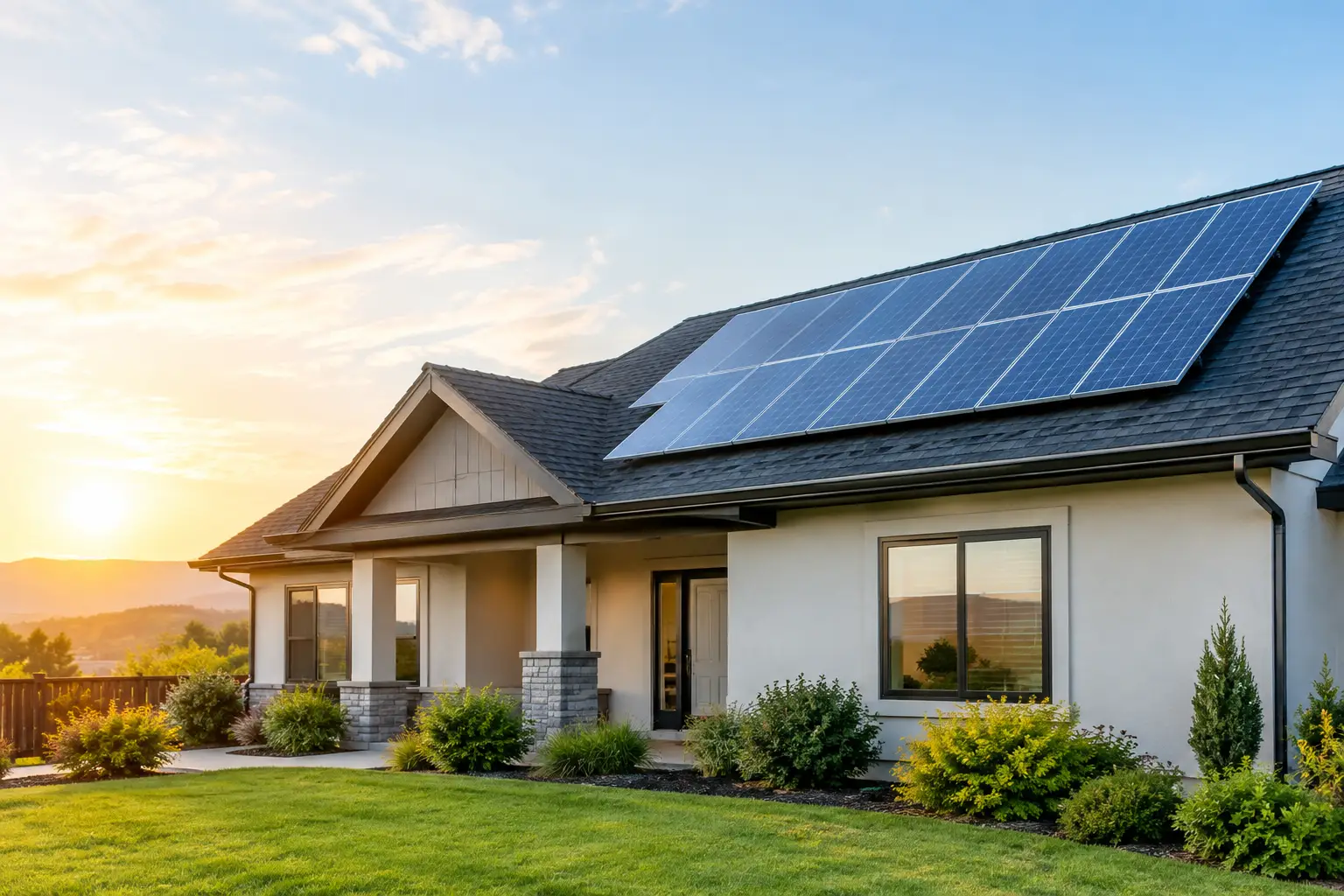
A power outage is rarely convenient. It can mean a dark kitchen, a warming refrigerator, no internet for work or school, and a home suddenly dependent on when the grid returns. Residential solar power systems give homeowners a practical way to take more control – lowering the amount of electricity they buy from the utility while creating a foundation for backup power when paired with a battery.
For homeowners across Virginia, North Carolina, South Carolina, and Georgia, solar is no longer only about panels on a roof. It is about building a more capable home: one that can produce energy during the day, store it for later, and better support the people inside it when the grid is unreliable.
What a Home Solar System Actually Does
A residential solar system converts sunlight into electricity your home can use. Panels capture solar energy, an inverter turns it into usable electricity, and your home uses that energy to power everyday needs such as lighting, appliances, electronics, and heating or cooling systems.
When your panels are producing power, your home generally uses solar electricity first. If production exceeds what the home needs at that moment, the extra energy may flow to the grid, depending on your utility’s interconnection rules and rate structure. When solar production is lower than your demand, such as at night or during heavy cloud cover, your home draws electricity from the grid unless a battery is available.
That is why the best system is not always the biggest system. A properly designed system should reflect your household’s electricity use, roof layout, utility rates, future plans, and goals for backup power. A family adding an electric vehicle, heat pump, pool, or home addition may need a different design than a homeowner focused mainly on offsetting current bills.
Why Residential Solar Power Systems Are a Smart Home Upgrade
Electricity costs can change, but your home still needs power every day. Solar helps reduce exposure to future utility-rate increases by allowing you to generate a portion of your own energy. The savings will vary based on your energy use, system size, sun exposure, local utility policies, and available incentives, so responsible planning matters more than broad promises.
Solar can also improve the way homeowners think about long-term home expenses. Rather than paying only for electricity month after month, you are investing in equipment designed to produce value over many years. Financing options can make that investment more approachable, allowing qualified homeowners to move forward without paying the full project cost upfront.
There is also a home-value conversation. Energy-efficient upgrades can make a property more appealing to buyers who want lower operating costs and modern features. Solar is not a guarantee of a specific resale result, but a well-designed, professionally installed system can be a meaningful improvement to the home.
Solar Panels Alone Do Not Provide Outage Backup
This point surprises many first-time solar buyers: solar panels by themselves typically do not keep your home powered during a grid outage. For safety, most grid-connected solar systems shut down when utility power goes out. This prevents electricity from flowing back onto lines that utility crews may be repairing.
To keep selected parts of your home operating during an outage, you need battery storage and the equipment that allows the system to safely separate from the grid. A battery stores excess solar energy for use after sunset, during expensive utility periods where applicable, or when the grid fails.
Choosing What to Back Up
Battery backup is usually designed around priorities. Many homeowners want to keep refrigeration, lighting, internet equipment, outlets, garage doors, and certain medical or communication needs running. Others want more extensive coverage for larger loads, such as well pumps, HVAC equipment, or whole-home backup.
The right choice depends on how much energy you use, how long outages tend to last in your area, and which comforts or essentials matter most to your family. Backing up an entire home generally requires more battery capacity and may cost more than backing up critical circuits. A good consultation makes these trade-offs clear before installation begins.
A Battery Changes How You Use Solar
Without a battery, excess solar production may be sent to the grid when it is generated. With a battery, you have the opportunity to keep more of that energy at home for later use. That can provide greater flexibility after sunset and a meaningful layer of resilience during outages.
Battery storage does not make a home invincible. Extended periods of cloudy weather, high energy use, and large appliances can draw down stored power quickly. Still, a carefully planned solar-and-battery system can turn an outage from a major disruption into a manageable inconvenience.
Your Roof Is Part of the Energy System
A solar project starts with the roof because the roof supports the system for decades. Its age, condition, material, pitch, orientation, shading, and usable space all affect whether solar is a strong fit and how the installation should be planned.
If a roof is nearing the end of its life, replacing it before installing panels may be the wiser financial decision. Removing and reinstalling solar later can add unnecessary cost and disruption. Coordinating roofing and solar work as one project helps protect your investment, simplify scheduling, and give the finished home a more unified result.
Trees, chimneys, dormers, and nearby buildings can also create shading that affects production. Not every roof needs to face one perfect direction for solar to make sense, but an honest site assessment should account for the real conditions of your property. Craftsmanship begins with designing around those conditions, not ignoring them.
What a Quality Installation Process Looks Like
A complete solar project involves more than mounting panels. It requires a thoughtful design, electrical planning, permits, utility coordination, installation, inspections, and system activation. Working with an experienced provider helps reduce the friction of managing each moving part yourself.
The process should begin with a conversation about your goals. Are you trying to lower a high electric bill? Are frequent storms and grid failures your biggest concern? Do you want to prepare for an electric vehicle or a future all-electric home? Your answers guide the system design.
Next comes an assessment of energy usage and the home itself. This is where roof condition, electrical capacity, panel placement, battery location, and backup priorities come together. A qualified team should explain what the system can reasonably do, what it cannot do, and how financing may fit into the decision.
At Rose Energy, that homeowner-first approach is backed by nearly 15 years of solar and electrical experience, with a focus on professionalism, integrity, and quality workmanship. The goal is not simply to install equipment. It is to help create a home energy system that fits the way you live.
Questions to Ask Before You Commit
Before selecting a provider, ask how the system will be sized, what assumptions are being made about your utility bill, and whether the proposal includes battery backup or solar only. Ask which circuits or appliances will remain powered during an outage, how roofing concerns will be addressed, and who will manage permits and utility paperwork.
You should also understand the financial structure. Solar financing can be useful, but terms, payments, ownership, and projected savings deserve careful review. The lowest monthly payment is not automatically the best long-term choice. A clear proposal should help you compare the total investment with your household’s goals.
Finally, consider the company behind the installation. Solar is a long-term addition to your home, so responsive service, local familiarity, electrical expertise, and a reputation for standing behind the work matter. An A+ Better Business Bureau accreditation and a commitment to lasting customer relationships can offer added confidence when you are making a major home decision.
Build for the Home You Want to Live In
The future is electric, and the time to plan is before the next rate increase or outage forces the issue. Residential solar power systems are not one-size-fits-all, but the right combination of solar, battery storage, roofing support, and professional installation can make your home more efficient, more resilient, and more prepared for what comes next.
A free consultation is a useful first step. Bring your recent electricity bills, your questions about outages, and your plans for the home. The strongest energy decisions begin with an honest look at what your family needs – then a system designed to meet it with quality, craftsmanship, and confidence.
Leave a Reply