
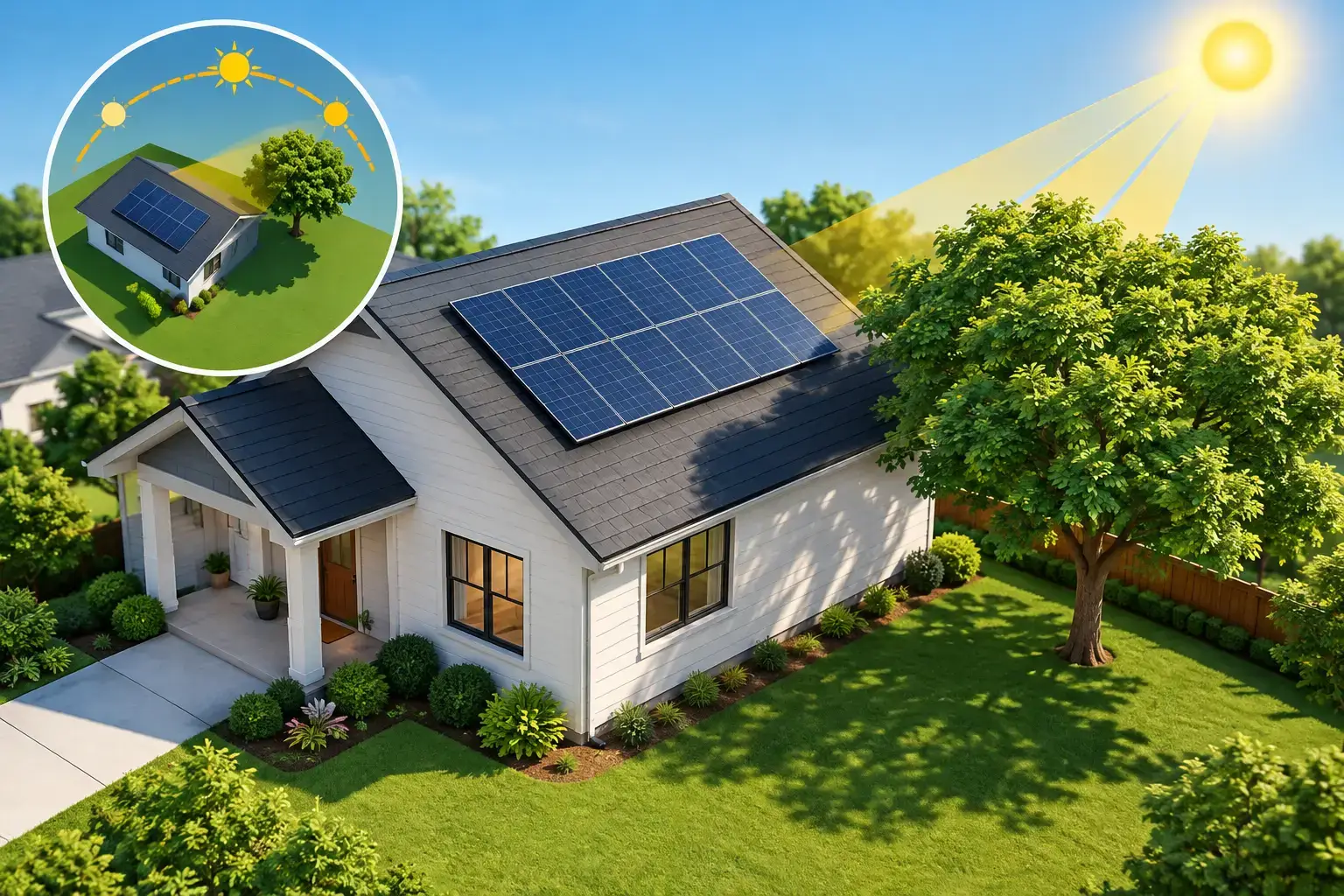
A roof can look perfectly sunny at noon and still have a shade problem that affects solar production for years. A tall pine at the edge of the property, a neighboring two-story home, a chimney, or even a vent pipe can cast shadows at the wrong time of day. Before choosing a system size or estimating savings, homeowners should evaluate shade for solar with a full-year view, not a quick look from the driveway.
For homeowners in Greenville and across the Southeast, this step matters because sunshine is abundant, but roofs, trees, and weather patterns are different from one property to the next. A quality solar design accounts for the home you have now while helping protect the energy goals you have for the future.
Why Shade Has an Outsized Effect on Solar Panels
Solar panels make the most electricity when sunlight reaches their surface evenly. When part of a panel is shaded, its output can drop. Depending on the equipment and system design, that shade can also affect the performance of other panels in the same electrical path.
This does not mean a home needs a completely open, treeless yard to benefit from solar. Many great solar homes have some shade. The real question is where the shade falls, when it occurs, how long it lasts, and whether the system can be designed around it.
A small shadow that crosses the lower corner of a panel for 15 minutes near sunset may have little effect on annual production. A large tree that shades the main roof plane from late morning through early afternoon can have a much greater impact. Midday sunlight is especially valuable because it is typically when panels produce the most power.
Shade also changes the financial side of a project. If expected production is lower, a homeowner may need more panels to meet a particular energy goal, assuming enough unshaded roof space is available. That can change the system cost, the expected utility savings, and the right battery strategy for the home.
How to Evaluate Shade for Solar Before Installation
The most useful shade evaluation combines a homeowner’s observations with a professional site assessment. Each reveals something the other may miss.
Start With Your Daily Observations
Think about your roof at several points during the day. Which sections receive direct sun in the morning? Do trees shade the home after lunch? Does a neighboring building create a long afternoon shadow? If you have lived in the home for a while, your experience is valuable because you have seen patterns that may not appear during a single appointment.
Photos can help. Take pictures of the roofline from the yard at morning, midday, and afternoon when it is safe to do so. You do not need to climb onto the roof. The goal is simply to document visible obstacles, including mature trees, chimneys, dormers, satellite dishes, and nearby structures.
Pay attention to future changes, too. A newly planted tree may be harmless today but become a major source of shade over the next decade. On the other hand, a tree that is already scheduled for professional pruning or removal may not need to dictate the solar layout. Honesty about these plans helps create a more accurate proposal.
Look Beyond One Season
Shadows move with the seasons. In summer, the sun travels higher across the sky, and a roof may receive broad exposure for much of the day. In winter, the sun sits lower, which can make trees and nearby buildings cast longer shadows.
Deciduous trees add another layer. Their leaves may create dense summer shade, while bare branches create lighter, shifting winter shade. Evergreen trees can block sunlight year-round. Because solar production varies seasonally as well, a professional assessment should model annual conditions rather than relying on a single sunny day.
This is one reason a winter site visit is not automatically bad news. It may reveal shading that would be easy to overlook in July. A strong design considers the complete picture before installation begins.
Consider Every Roof Plane, Not Just the Front Roof
Homeowners often focus on the largest or most visible roof section, but it may not be the best place for panels. A rear-facing roof plane with fewer obstructions can outperform a larger section that receives heavy tree shade. East- and west-facing roof areas can also be valuable, particularly for households that use more power in the morning or late afternoon.
Roof direction and pitch affect production, but they are not the only factors. An unshaded east- or west-facing roof can be a better solar location than a south-facing roof blocked by mature trees. The best layout is the one that balances available space, sun exposure, roof condition, household electricity use, and long-term goals.
What a Professional Shade Assessment Should Include
A professional solar consultation should move beyond a rough estimate based on a satellite image. Aerial imagery is useful, but it cannot always show a roof’s true condition, recent tree growth, or obstructions hidden by the angle of the photo.
During an assessment, a qualified team evaluates the roof’s orientation, pitch, usable surface area, structural features, and likely shade paths. Specialized tools can model how the sun moves across the property and estimate the expected production from different panel locations over the year.
The assessment should also consider the electrical design. Systems using panel-level power electronics, such as microinverters or optimizers, can help reduce the impact of partial shade compared with some traditional system designs. They are not a substitute for proper placement, but they can be a smart choice when minor, unavoidable shade is part of the property.
Ask to see how shading assumptions affect projected production. A trustworthy proposal should make clear why panels are placed where they are, what annual output is expected, and which factors could change those results. Transparency is part of building confidence in a long-term home investment.
Trees, Trimming, and Practical Trade-Offs
Trees provide privacy, cooling, beauty, and habitat. Solar planning should not treat every tree as an obstacle to remove. In some cases, selective pruning is enough to improve sunlight on the roof while preserving the character of the yard. In other cases, the tree is too close, too large, or too valuable to alter, and the system should be designed around it.
Tree work should be handled thoughtfully and, when needed, by a qualified tree professional. Avoid making major removal decisions based solely on a quick production estimate. Consider safety, local rules, property lines, storm risk, and whether the tree already threatens the roof.
It is also worth considering the cooling benefit of shade. A shaded roof may reduce summer heat gain inside the home, while clearing that shade can increase solar production. The best choice depends on the home’s insulation, HVAC performance, electricity use, and solar goals. A well-planned system weighs the whole home, not just the panels.
Shade, Batteries, and Outage Planning
Battery storage brings valuable backup capability during grid outages, but it does not create solar power when the roof is heavily shaded. If an outage happens during the day, a solar-plus-battery system can recharge from available solar production. More sunlight generally means more opportunity to support essential loads and extend backup power.
That is why shade planning matters for resilience as well as savings. A homeowner who wants to keep refrigeration, lights, internet, or select circuits running during an outage needs a system designed around realistic production. The battery size, backup load plan, and solar layout should work together.
For some homes, the right answer is a solar and battery system sized for essential backup. For others, it may be a larger energy system that supports more of the home. Shade is one of the practical details that helps determine which option fits your priorities and budget.
Do Not Overlook the Roof Itself
A solar system is expected to serve your home for decades, so the roof beneath it deserves equal attention. If your roof is nearing the end of its useful life, replacing it before solar installation can prevent the expense and disruption of removing and reinstalling panels later.
Roof features can also influence shade and panel placement. Chimneys, skylights, dormers, and vents create physical limitations and shadows that need to be included in the layout. Coordinating roofing and solar work through one experienced team can make the process easier, protect workmanship, and keep the project moving forward with fewer surprises.
A sunny roof is a strong starting point, but a thoughtful assessment is what turns that opportunity into a dependable home energy plan. Bring your questions, your energy bills, and your goals for savings and backup power to a free consultation. With the right information, you can choose a solar design that respects your home, makes room for the shade you cannot change, and puts more of the sun to work for your family.
Leave a Reply