
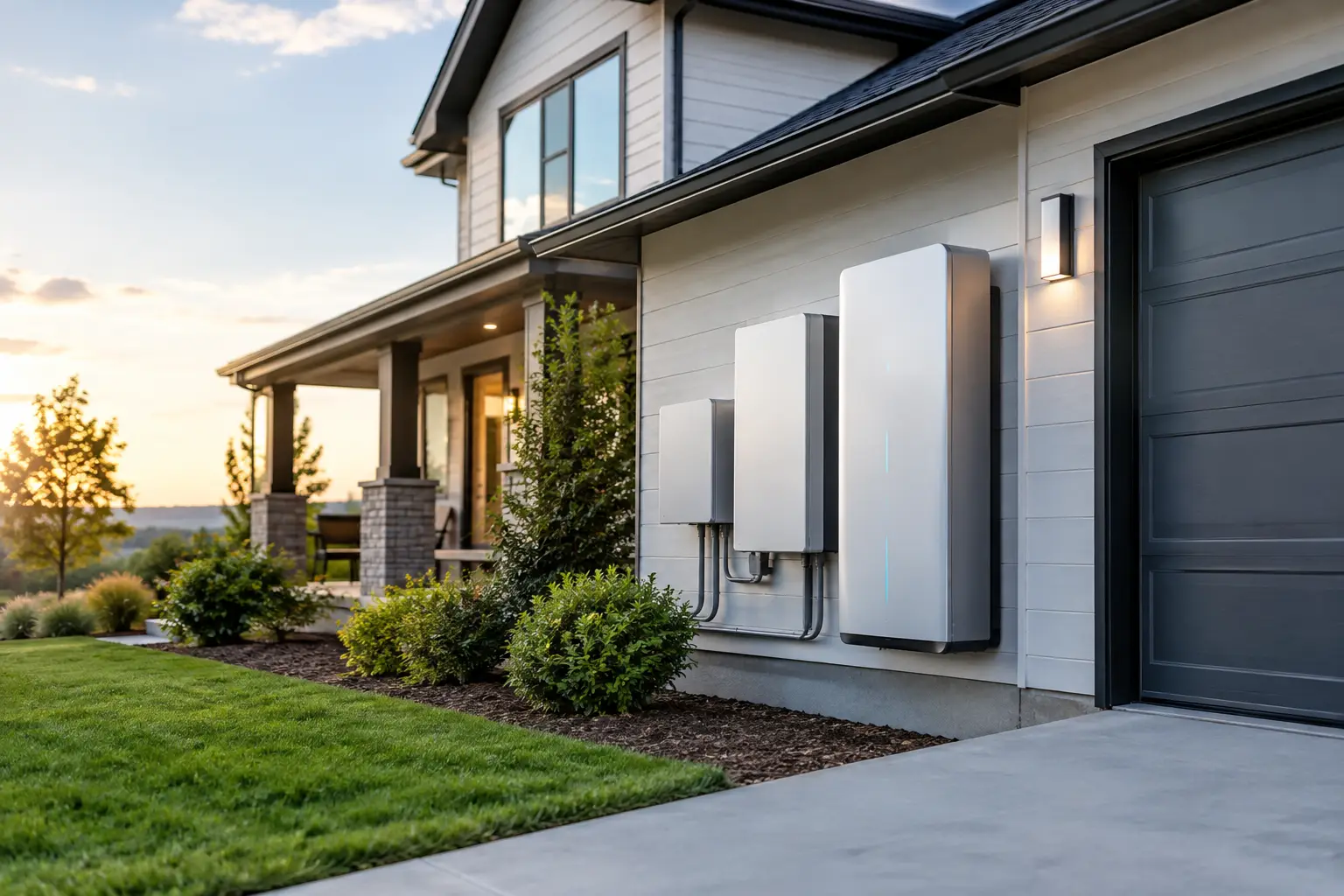
A summer storm knocks out the power just as dinner is cooking. The refrigerator goes quiet, the Wi-Fi drops, and suddenly every device in the house is competing for a place to charge. For homeowners across Virginia, North Carolina, South Carolina, and Georgia, whole home battery backup power can turn that familiar disruption into a manageable inconvenience.
A home battery stores electricity for use when you need it most. It can provide backup power during an outage, help you use more of the solar energy your panels produce, and reduce how much electricity you buy from the utility during expensive periods. The right system is not just about keeping a few lights on. It is about designing dependable power around the way your household actually lives.
What Whole Home Battery Backup Power Means
The phrase “whole home” can mean different things depending on the home, the battery capacity, and the appliances you want to run. In the broadest sense, it means your battery system is designed to support most or all of your home’s electrical needs during an outage, rather than powering a small set of emergency circuits.
A battery system does not create electricity on its own. It stores energy from the grid, solar panels, or both. When utility power fails, the system detects the outage and safely separates your home from the grid. It then supplies stored energy to your electrical panel. If you have solar and the sun is shining, your panels may also recharge the battery and extend the available backup time.
That does not automatically mean every appliance can run at once. Large electric loads such as central air conditioning, electric resistance heat, ovens, clothes dryers, pool equipment, and EV chargers can require significant power. A well-designed system accounts for those loads from the beginning so your backup experience matches your expectations.
Start With the Life You Want to Protect
The best battery plan begins with a practical conversation: What needs to keep working when the grid is down? For one family, that may mean refrigeration, lighting, internet, medical equipment, garage access, and a few outlets. For another, it may also include a well pump, sump pump, home office, security system, or central HVAC.
This is why battery sizing is personal. A smaller system can protect the essentials through a shorter outage at a lower upfront cost. A larger whole-home setup can offer greater comfort and flexibility, especially for households that rely on electric heating and cooling or want to avoid making hard choices during extended outages.
Your daily electricity use matters, but outage priorities matter even more. A home that uses a lot of energy because of a pool or EV charging may not need those items backed up. Meanwhile, a modest-sized home with a well pump or medical equipment may need careful electrical planning. The goal is not to buy the largest battery possible. It is to invest in the right amount of resilience for your family.
Capacity and power are not the same thing
Two battery specifications shape what your system can do: energy capacity and power output. Capacity, usually measured in kilowatt-hours, affects how long the battery can run your loads. Power output, measured in kilowatts, affects how many and which appliances it can start and operate at a given time.
Think of capacity as the size of the fuel tank and power as the strength of the engine. A system may hold plenty of energy but still need adequate output to start a heat pump or run multiple high-demand appliances. An experienced solar and electrical team evaluates both, along with your home’s panel, wiring, and major equipment.
Solar Makes Backup Last Longer
A battery can be valuable on its own, but pairing it with solar changes the equation. Without solar, a battery has a finite stored supply. Once it is depleted during a prolonged outage, it must wait for the grid to return or for another charging source.
With solar panels and the proper battery equipment, your home can use daytime solar production to power appliances and recharge the battery. That can significantly extend backup capability during a multi-day outage, particularly when you manage high-energy appliances thoughtfully.
Solar production varies with weather, season, roof orientation, shading, and time of day. A battery also has limits. During several cloudy days, even a well-designed solar-plus-storage system may require conservation. Still, the combination gives homeowners far more control than relying on the grid alone.
It can also bring benefits when the grid is operating normally. Instead of sending all surplus solar power away during the day, you can store some for evening use. Depending on your utility rate structure, that may help reduce the electricity you purchase when demand and prices are higher.
Can a Battery Run Your Air Conditioner?
Often, yes, but the answer depends on the equipment and system design. Modern heat pumps and high-efficiency air conditioners may be easier to support than older, less efficient units, especially when paired with a soft-start device or load-management controls. However, cooling a home in a Southern summer uses meaningful energy, and it can shorten backup duration quickly.
Some homeowners choose a whole-home system that supports HVAC operation. Others prioritize critical loads and use the battery to maintain refrigeration, communications, lighting, fans, and select rooms until power returns. Neither approach is wrong. The right choice comes down to comfort expectations, budget, existing electrical equipment, and how often your area experiences longer outages.
A professional assessment should also consider whether your electrical panel needs an upgrade. Adding solar, battery storage, and new electric appliances can be an opportunity to modernize the home’s electrical foundation rather than patch together separate projects over time.
What Affects the Cost of a Home Battery System?
Battery pricing varies because no two homes have the same energy needs. The number of batteries, desired backup loads, solar integration, electrical upgrades, site conditions, and installation complexity all influence the investment.
It helps to view a battery as more than outage insurance. It can protect food, prevent a flooded basement when a sump pump needs power, keep remote work possible, and provide a more comfortable home during a grid failure. When paired with solar, it can also help you make better use of the energy produced on your own roof.
Financing can make a complete home energy system more accessible by spreading the cost over time. Federal, state, utility, and local incentives may also affect the final economics, though availability and eligibility can change. A consultation should include a clear review of your options rather than one-size-fits-all promises.
Choose Installation Quality Over Shortcuts
A battery is a major electrical system connected to your home, solar array, utility service, and daily routines. Quality installation is essential. The work should account for local permitting requirements, utility interconnection rules, electrical code, battery placement, panel configuration, and the condition of the roof if solar is part of the project.
For homeowners considering solar and storage together, coordinating the project with one trusted team can reduce friction. If a roof replacement is needed before solar installation, addressing it early can help avoid removing and reinstalling panels later. The same principle applies to electrical upgrades: handle the foundation correctly, and the finished system is better positioned to serve your home for years.
Ask prospective installers how they size systems, which loads they recommend backing up, what happens during an outage, and how they handle service after installation. Clear answers, careful craftsmanship, and professional communication are part of the value – not extras.
Is a Whole-Home Battery Right for You?
Whole-home battery backup power is especially compelling if outages are common in your area, your household relies on electrically powered essentials, or you want to pair resilience with lower solar reliance on the grid. It may also make sense if you are planning a roof replacement, panel upgrade, or solar installation and want to complete the work as one coordinated home investment.
It may not be necessary for every homeowner. If outages are rare and short, a smaller essential-load battery may provide the confidence you want at a lower cost. If your goal is maximum independence, a larger solar-plus-storage system with thoughtful load management may be the better path.
The future is electric, and the time to plan for a stronger home is before the next outage arrives. A free consultation with a knowledgeable local team can help turn your home’s energy use, roof condition, and backup priorities into a system built with integrity, quality, and lasting peace of mind.
Leave a Reply