
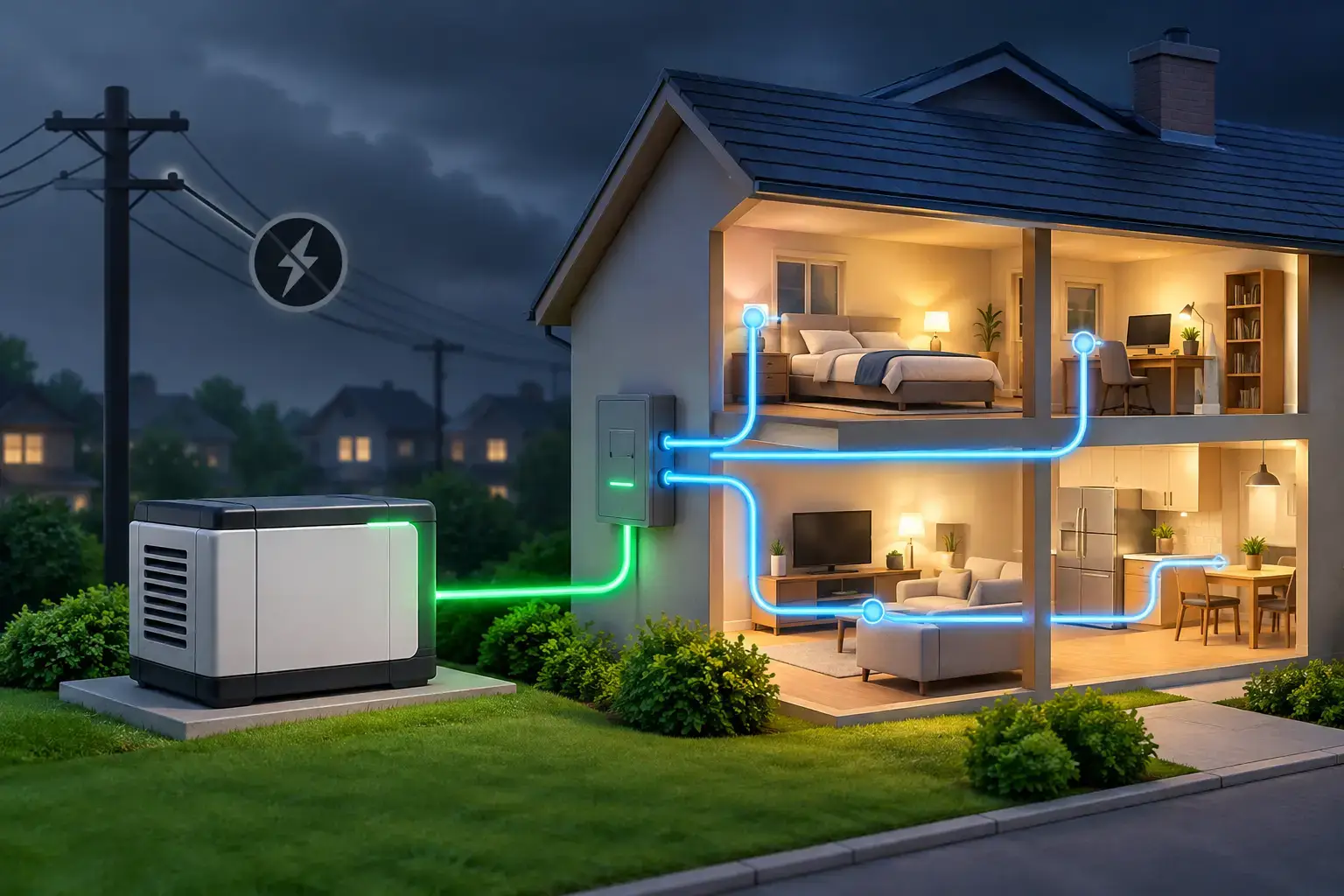
A summer thunderstorm knocks out power across the neighborhood. Your lights stay on, the refrigerator keeps running, and your phone still has a place to charge. That is how backup power works when it is designed around your home, your essential needs, and the way your family actually lives.
For homeowners, backup power is no longer limited to a noisy generator in the driveway. A modern home battery can detect a grid outage, safely separate your home from the utility system, and begin supplying stored electricity in moments. When paired with solar, it can also help your home recharge and operate for longer during daylight hours.
How Backup Power Works in a Home
Your home normally receives electricity from the utility grid. Backup power adds another source of energy that can take over when that grid supply is unavailable. In a battery-based system, electricity is stored in a home battery and managed by equipment that monitors both the grid and your home’s energy use.
When the grid is operating normally, the system can charge the battery with solar energy, lower-cost utility electricity, or a combination of both. The best charging approach depends on your electric rate plan, solar production, household consumption, and energy goals. Some homeowners want to maximize solar use. Others want to hold most of the battery in reserve for outages.
When an outage occurs, an automatic transfer device recognizes the interruption. It disconnects your home from the grid and tells the battery system to begin supplying power. This changeover is designed to happen quickly enough that many homeowners notice little more than a brief flicker.
The disconnection matters for safety. It prevents electricity from your home from flowing back onto utility lines while crews are working to restore service. This process is often called islanding: your home becomes its own small, self-contained power system until the grid returns.
The key parts of a battery backup system
A complete backup system includes more than a battery on the wall. The battery stores energy, while an inverter converts that stored direct-current electricity into the alternating-current electricity your appliances use. A transfer switch or system controller manages the transition during an outage, and an electrical panel distributes power to the circuits selected for backup.
If solar panels are part of the system, they can produce electricity during the day and send available energy to the home, battery, or both. Smart controls coordinate these pieces so your system uses energy safely and efficiently.
Quality installation is just as important as the equipment itself. Battery capacity, electrical panel configuration, roof condition, solar design, and local permitting all affect how the system performs. A professional assessment helps make sure the backup plan fits the home rather than forcing the home to fit a standard package.
What Will Backup Power Run?
The answer depends on the size of your battery, the power needs of your appliances, and the backup design you choose. A battery does not create unlimited electricity. It provides a stored amount of energy and can deliver a limited amount of power at one time.
Many homeowners choose essential-load backup. This directs battery power to the circuits that matter most during an outage, such as refrigeration, lighting, internet equipment, outlets for device charging, garage doors, and selected kitchen circuits. It can also support a gas furnace blower, a sump pump, or a well pump when the system is properly sized for those loads.
Whole-home backup is another option. It is designed to keep more of the house running, potentially including larger loads such as central air conditioning, electric water heating, pool equipment, or an electric range. Whole-home coverage often requires more battery capacity and careful load planning, especially in larger homes or homes with all-electric appliances.
The difference between energy and power is useful here. Energy determines how long a battery can run your home. Power determines what it can run at the same moment. A battery may have enough stored energy for an overnight outage, but running several high-demand appliances at once can drain it faster or exceed the system’s output limit.
That is why a clear conversation about household habits matters. If your family needs refrigeration, internet, lights, and medical equipment protected, the system can be designed around those priorities. If keeping air conditioning operating through hot South Carolina afternoons is the goal, the design may call for additional batteries, solar capacity, or smart load controls.
How Solar Changes Backup Power During an Outage
Solar panels alone usually do not keep a home powered when the grid goes down. For safety, a standard grid-tied solar system shuts down during an outage. This protects utility workers and prevents uncontrolled power from reaching the grid.
Add battery storage and the picture changes. The battery and backup controller allow the solar system to operate as part of a safe, isolated home energy system. During daylight, solar production can serve current household needs first and charge the battery with excess power. At night, the battery supplies stored energy.
This combination can extend outage protection substantially, but it is not a guarantee of endless power. Cloud cover, shorter winter days, shade, roof orientation, and high household energy use all influence how much solar energy is available. If your home uses more power than the panels produce and the battery holds, stored energy will eventually run low.
A well-designed solar and battery system helps you manage that trade-off. Some systems can automatically reduce or pause nonessential loads when battery charge reaches a selected level. That preserves power for the items you need most instead of leaving every appliance running until the battery is depleted.
Battery Backup vs. a Generator
Both batteries and generators can protect a home during an outage, but they work differently. A generator produces electricity by burning fuel, often gasoline, propane, or natural gas. A battery stores electricity that was collected earlier from solar, the grid, or both.
Generators can be a practical choice for long outages, particularly when they are connected to a reliable fuel source and properly maintained. They can also support large loads depending on their size. Their trade-offs include noise, fuel needs, emissions, maintenance, and the delay involved with starting some models.
Battery backup operates quietly and automatically. It has no fuel combustion at the home, requires less routine maintenance, and pairs naturally with solar. Its main limitation is capacity: a battery must be sized thoughtfully for the duration and loads you want to cover. For some homes, a battery is the right standalone solution. For others, a generator, more battery storage, or a hybrid approach may make sense.
Choosing the Right Amount of Backup Power
The best system starts with questions, not a one-size-fits-all battery size. Consider how often outages occur, how long they typically last, and which appliances are truly essential. Also consider whether you want backup power mainly for comfort, safety, food preservation, work-from-home reliability, or greater independence from the grid.
Your current electric usage provides a starting point, but it does not tell the full story. A monthly utility bill shows total consumption over time. Backup design requires a closer look at when and how power is used, especially during an outage. Air conditioning, electric heat, EV charging, electric dryers, and kitchen appliances can all have a major impact.
Home improvements can change the equation as well. A new roof may be the right first step before installing solar. An electrical panel upgrade may be needed to support modern equipment. Coordinating roofing, solar, battery storage, and electrical work through one experienced team can prevent unnecessary rework and help protect the long-term value of the installation.
What Happens When the Grid Comes Back?
When utility power is restored, the backup system verifies that the grid is stable before reconnecting. It then transitions the home back to normal operation and resumes its charging strategy. Depending on your settings, the system may replenish the battery from solar production, from the grid during lower-cost hours, or from both.
You do not need to operate switches or move extension cords for a properly installed automatic battery system. Still, it is smart to understand your monitoring app, know which circuits are backed up, and review your energy priorities with the installer. A little familiarity makes it easier to use your system confidently when an outage happens.
Backup power is ultimately about more than keeping a few lights on. It gives your household a practical layer of security and more control over the energy your home depends on. A free consultation can turn your outage concerns, roof conditions, and energy goals into a clear plan built with craftsmanship, integrity, and the right level of protection for your family.
Leave a Reply