
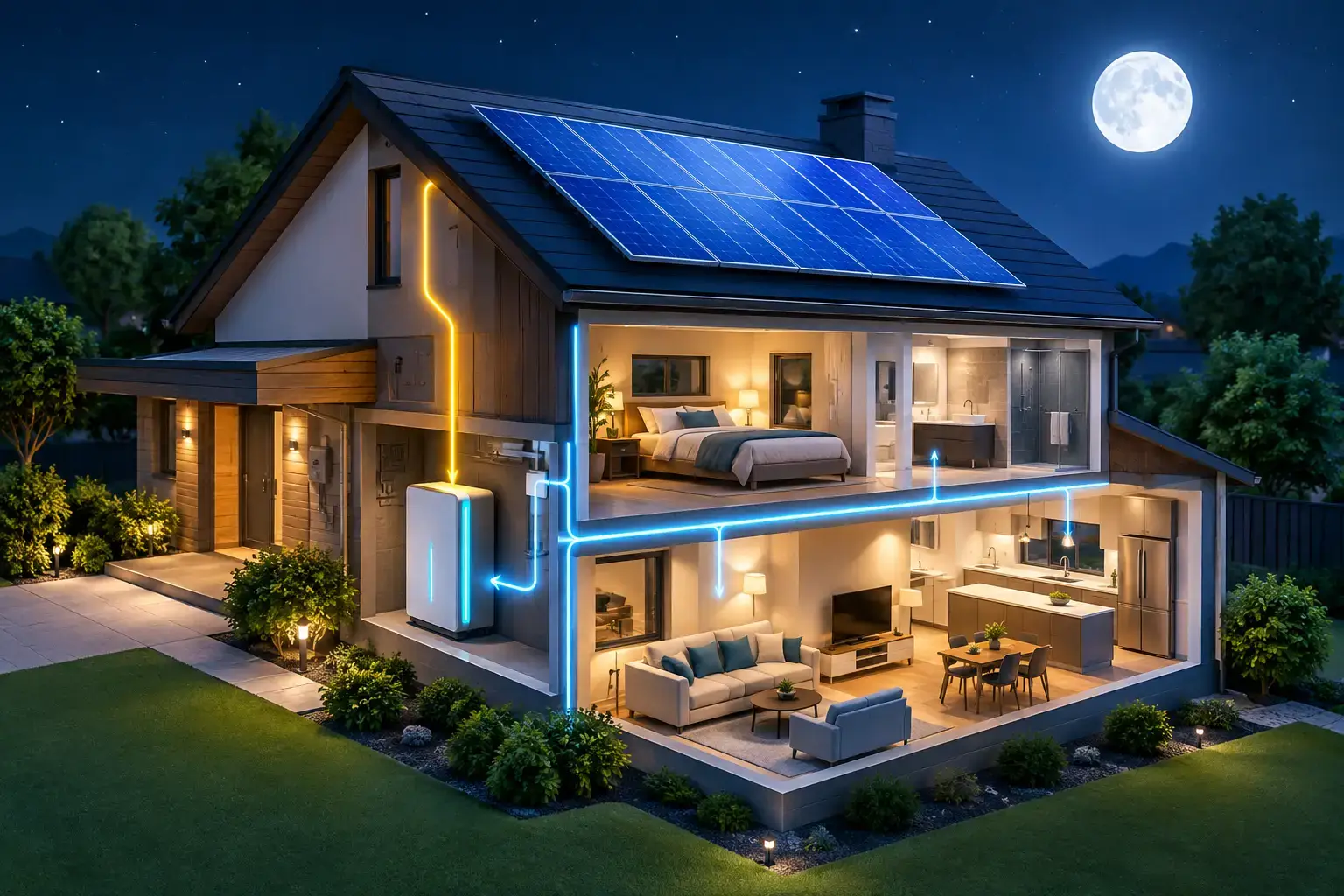
A sunny afternoon can produce more electricity than your home needs in that moment. Without a battery, that extra solar power typically flows to the grid. With battery storage, your home can save much of that energy for later – when the sun is down, utility rates are higher, or an outage interrupts the neighborhood.
Understanding how solar batteries charge helps homeowners make better decisions about backup power, monthly energy costs, and the right system size. The basic idea is straightforward: solar panels make electricity, the battery stores available excess energy, and your home uses that stored energy when it delivers the most value. The details depend on your equipment, energy use, utility plan, and the way your system is designed.
How solar batteries charge from your panels
Solar panels generate direct current, or DC, electricity whenever sunlight reaches the cells. That electricity first serves active loads in your home, such as lights, appliances, electronics, and heating or cooling equipment. If your panels are producing more than the home needs, the remaining energy can be directed into a compatible battery.
An inverter manages the conversion between DC and the alternating current, or AC, electricity used by most homes. Depending on the system design, a battery may use a hybrid inverter or a separate battery inverter. The equipment continuously measures solar production, household demand, battery level, and grid conditions to decide where the electricity should go.
A typical daytime sequence looks like this: your panels power the home first, then charge the battery with surplus production. Once the battery reaches its programmed charge limit, additional solar energy may flow to the grid. Later, when production drops below household demand, the battery can discharge to cover some or all of the difference.
This is why a battery is not simply a large container of electricity. It is part of an intelligent home energy system that responds to changing conditions throughout the day.
Can a solar battery charge from the grid?
Yes, many solar battery systems can charge from the grid, but whether they do so depends on the battery model, local interconnection rules, and your preferred settings. Grid charging can be useful when your utility offers time-of-use rates. Your battery may charge during lower-cost hours, then power the home during expensive peak-rate periods.
Some homeowners also choose a reserve level for outage protection. For example, you might keep 30% or 50% of the battery available rather than using every stored kilowatt-hour overnight. That reserve is there if a storm, accident, or grid failure cuts power before the next sunny day.
Grid charging is not always the best financial choice. If electricity costs the same all day and your panels regularly fill the battery, charging from the utility may offer little benefit. A well-designed system should be configured around your goals: reducing utility purchases, protecting essential circuits, maximizing solar self-consumption, or balancing all three.
What happens during a power outage?
This is the point many homeowners find most important. Standard grid-tied solar panels shut down during an outage for safety. They cannot continue sending electricity onto utility lines while crews may be working to restore power.
A solar-and-battery system designed for backup works differently. When the grid goes down, the system isolates your home from the utility. The battery begins supplying selected loads, and the solar panels can continue producing electricity when sunlight is available. During the day, solar energy can run the home and recharge the battery for use after sunset.
Backup duration depends on what you choose to power. A battery can support essentials such as refrigeration, lighting, internet equipment, outlets, and some medical devices for far longer than it can support every high-demand appliance at once. Central air conditioning, electric resistance heat, pool equipment, electric water heaters, and electric vehicle charging can use substantial power.
That does not mean whole-home backup is out of reach. It means the battery capacity, inverter output, solar production, and home load profile must be matched carefully. A consultation should look beyond the size of your roof and consider how your household actually uses electricity.
What controls how quickly a solar battery charges?
Battery charging speed is not based on panel count alone. Several parts of the system work together to set the pace.
First, available solar production matters. Clear skies generally produce more energy than heavy cloud cover, shade, or short winter days. Panels do not need blazing heat to work well, but they do need adequate sunlight. In the Carolinas and Georgia, seasonal weather and roof orientation can affect how much extra solar energy is available for charging at different times of year.
Second, your home’s current consumption matters. If your solar system is producing 6 kilowatts and your home is using 4 kilowatts, only about 2 kilowatts are available for battery charging before other system limits apply. Running large appliances in the middle of the day can reduce the surplus going into storage.
Third, every battery has a maximum charge rate. A larger battery may hold more energy, but it cannot necessarily accept unlimited power at once. The inverter and electrical design also place limits on charging and discharging. This is one reason battery capacity and battery power are different decisions.
- Capacity, measured in kilowatt-hours, indicates how much energy the battery can store.
- Power, measured in kilowatts, indicates how much electricity it can deliver or accept at one time.
- Usable capacity reflects the portion of stored energy available for your home after the system preserves operating limits.
- Round-trip efficiency reflects the small amount of energy lost as electricity is stored and later used.
A larger capacity may extend overnight coverage. Higher power output may better handle more appliances starting or running at once. The right combination depends on your priorities, not just on choosing the biggest battery available.
How the battery protects itself
Modern home batteries include a battery management system that monitors voltage, current, temperature, and state of charge. This control system helps prevent overcharging, excessive discharge, and operation outside safe temperature ranges.
Most lithium-ion home batteries do not use every last bit of their physical capacity. Manufacturers build in protections that support performance and battery life. Your app may show a battery at 100%, but the system is still managing those behind-the-scenes limits.
Heat, frequent deep cycling, and high-demand use can all influence long-term battery performance. That is normal for any rechargeable energy storage product. Quality equipment, correct installation, and thoughtful settings help protect the investment over time.
Choosing settings that fit your household
There is no single “best” battery setting for every homeowner. A family focused on outage resilience may prioritize a high backup reserve. A homeowner facing steep evening utility rates may prioritize discharging the battery after work and recharging from solar the next day.
Your priorities can also change by season. During hurricane season or when severe weather is forecast, it can make sense to preserve more stored energy. During stable weather, you may choose settings that maximize daily solar savings. Many systems make these adjustments easy to review through monitoring tools, but the original system design still matters most.
It also helps to think ahead about your roof. Since solar production drives battery charging, an aging roof can create an avoidable complication later. Coordinating roofing, solar, and electrical work in one project can protect your investment and reduce disruptions to the home.
A battery should be designed around real life
The strongest home energy systems are not built around a generic promise of backup power. They are built around the appliances you rely on, the way your family lives, your utility costs, and the level of independence you want from the grid.
Rose Energy helps homeowners evaluate those decisions with a focus on craftsmanship, integrity, and practical performance. A free consultation can clarify what your solar panels could produce, how quickly a battery could recharge, and what your home could support when the grid is unavailable. The goal is simple: make your next sunny day work harder for your home – and give your family more confidence when the lights around you go out.
Leave a Reply