
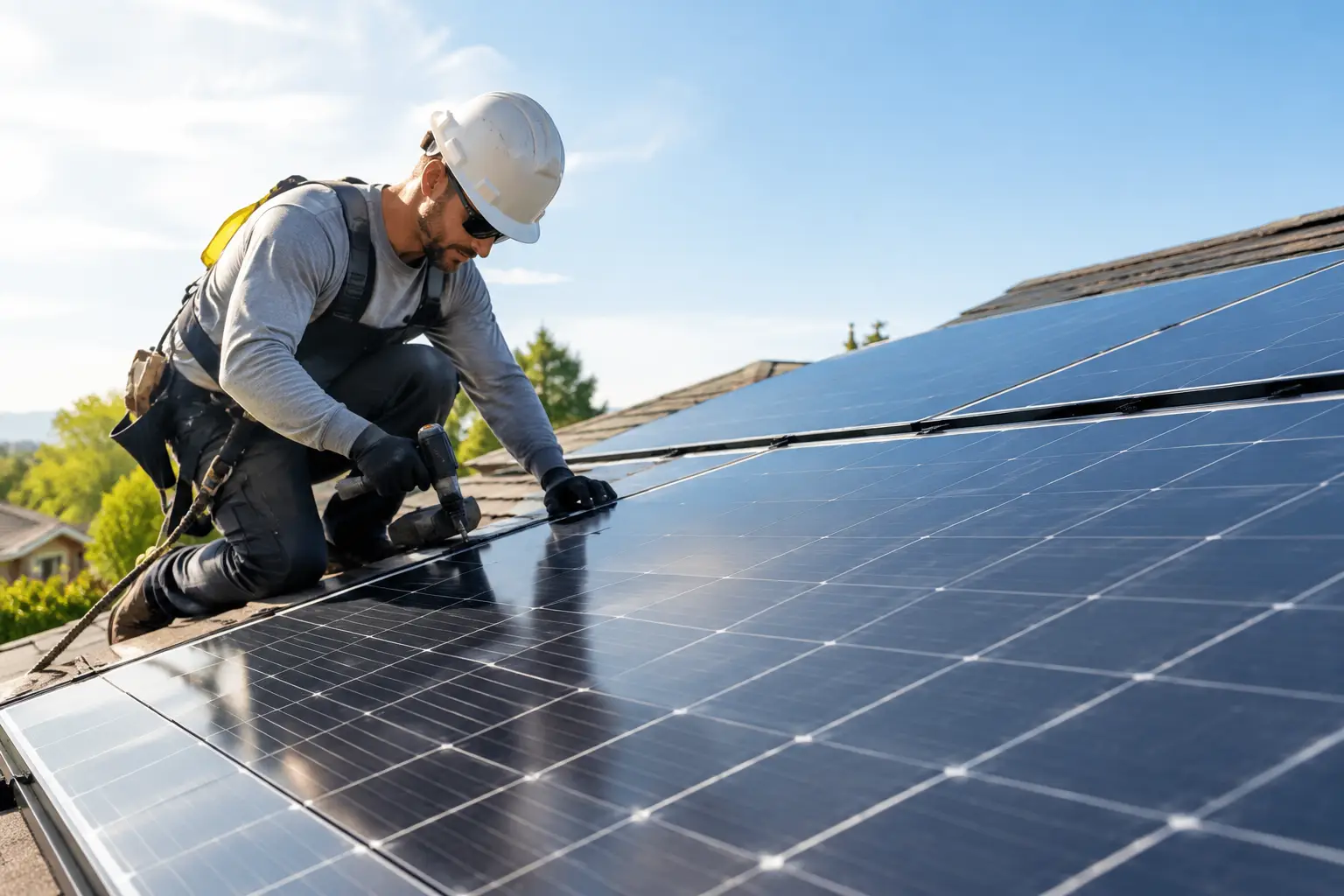
A solar proposal can look great on paper and still be wrong for your home. The difference often comes down to the team behind it: the people measuring your roof, reviewing your utility usage, designing your system, and standing behind the work after the panels are producing power. When you search for residential solar panel installers near me, you are not simply looking for the lowest price. You are choosing a long-term home energy partner.
For homeowners across Virginia, North Carolina, South Carolina, and Georgia, solar can be a practical way to reduce reliance on rising utility costs and prepare for the outages that can disrupt everyday life. Adding battery storage can make that investment even more useful, keeping selected parts of your home powered when the grid goes down. The right installer helps you make decisions based on your home, your goals, and your budget – not a one-size-fits-all sales pitch.
Start With Your Home, Not a Sales Quote
A quality solar project begins with questions. How much electricity does your household use each month? When do you use the most power? Is your goal lower utility bills, backup power during outages, greater energy independence, or a combination of all three?
Your past utility bills provide the starting point. An experienced installer should review at least a full year of usage when possible, since heating, air conditioning, pool equipment, and seasonal routines can change your energy needs significantly. A system sized only around one low-use month may leave you disappointed. A system designed without discussing future needs, such as an electric vehicle, heat pump, or growing family, may not serve you well for long.
The roof matters just as much. Its age, condition, material, orientation, shading, and usable space all affect the design. If a roof is nearing the end of its life, replacing it before installing solar is often the smarter choice. Removing and reinstalling panels later adds cost and complication. A provider that understands both roofing and solar can help coordinate that decision before work begins.
What Local Solar Expertise Should Look Like
Local does not only mean an office within driving distance. It means familiarity with the conditions that shape a project in your area: regional weather, utility requirements, permitting practices, roof styles, and the electrical needs common in local homes.
When comparing residential solar panel installers near me, look for a company that can clearly explain who will perform the work and how the project will move from consultation to activation. You should know whether the installer handles design, permitting, utility coordination, installation, inspections, and system monitoring. A clear process reduces surprises and keeps responsibility from being passed between multiple parties.
Experience also matters when your project includes more than panels. Solar connects to your home’s electrical system. Batteries require thoughtful planning around essential loads, backup goals, and safe installation. If your main electrical panel needs an upgrade, that work should be addressed early, not discovered halfway through the project.
Ask how the company evaluates craftsmanship. The best answer is not vague reassurance. It should include a site assessment, a documented design, professional installation practices, final inspections, and a plan for service after the system is turned on. Rose Energy brings nearly 15 years of solar and electrical experience to this process, with an approach built around integrity, professionalism, and durable work.
Solar Alone or Solar With Battery Storage?
Solar panels produce electricity when sunlight is available. A standard grid-connected solar system typically shuts down during an outage to protect utility workers, even if the sun is shining. That detail catches many homeowners off guard.
Battery storage changes the conversation. With the right design, a battery can store solar energy for later use and provide backup power during an outage. Rather than trying to power every appliance in the house indefinitely, many homeowners choose to support priority circuits such as refrigeration, lighting, internet equipment, outlets, a garage door, or certain heating and cooling equipment.
The best choice depends on what you want protected. A homeowner who only wants to keep food cold and phones charged has different needs than a family that wants extended backup for medical equipment, a well pump, or home office equipment. Larger backup goals may require more battery capacity, electrical upgrades, load management, or a change in expectations about which appliances can run at the same time.
A good installer will not promise unlimited backup without discussing those trade-offs. They will help you identify what matters most when the grid is unavailable and build a system around that plan.
Compare Proposals Beyond the Bottom Line
Two proposals can show similar panel counts and very different long-term value. Before signing, make sure you understand the equipment, system size, expected production, installation scope, warranty coverage, and payment terms.
Pay attention to the assumptions behind projected savings. Electricity rates, household consumption, weather, utility policies, and the amount of solar energy you use in real time can all affect results. Solar is a long-term home investment, not a guaranteed identical monthly bill. A trustworthy proposal explains the estimate and leaves room for real-world variables.
Financing also deserves a direct conversation. Some homeowners prefer to pay upfront; others choose financing to make solar and storage more accessible. Review the total cost, interest rate, term length, monthly payment, and any lender fees. If incentives or tax benefits are discussed, ask how they apply to your situation and confirm details with a qualified tax professional. Programs and eligibility can change, and no installer should treat a tax credit as automatic for every household.
It is also worth asking what happens after installation. Find out how system monitoring works, whom to call if production seems unusual, and whether the company provides support if your roof or electrical needs change. A lower initial price may not feel like a bargain if help is difficult to reach later.
Questions That Reveal the Right Installer
A productive consultation should leave you more informed, not pressured. Ask how the system size was determined, whether your roof should be repaired or replaced first, and which parts of your home would remain powered during an outage. Ask who will manage permits, inspections, and utility approval, as well as what timeline is realistic for your location.
You should also ask about licenses, insurance, workmanship coverage, equipment warranties, and the process for addressing an issue after activation. An A+ Better Business Bureau accreditation can be one useful signal, but it should be paired with clear answers, detailed documentation, and a professional attitude from the first conversation onward.
Be cautious if a company will not inspect your roof, refuses to discuss shading, avoids questions about your electrical panel, or pushes you to sign before you understand the proposal. High-pressure claims about “free” solar, guaranteed savings, or immediate installation often leave out important details. Your home deserves a design built on facts, not urgency.
A Coordinated Project Protects Your Investment
Solar is easiest when your installer sees the whole home. Roofing, electrical capacity, panel placement, battery backup, permits, and utility approval are connected. Treating each item as an isolated problem can lead to extra work later.
For example, a roof replacement may be the right first step for an older roof. An electrical service upgrade may be needed to support a battery system safely. Tree trimming might improve production, but only after considering the health of the trees, local rules, and your property’s shade pattern. There is no universal answer, which is why an honest site evaluation is more valuable than a generic online quote.
The future is electric, and the time to plan for a stronger home energy system is now. Start with a free consultation, bring your recent utility bills and your outage concerns, and choose an installer that treats your home with the care, craftsmanship, and respect a long-term investment requires.
Leave a Reply